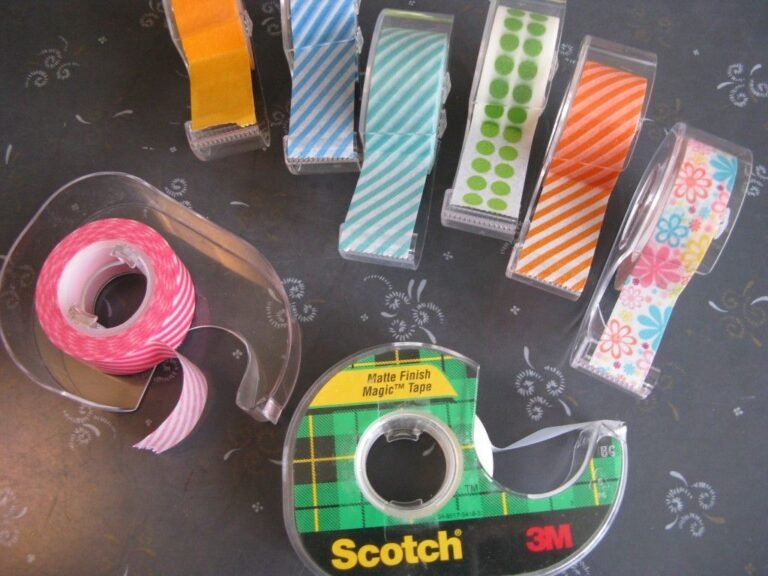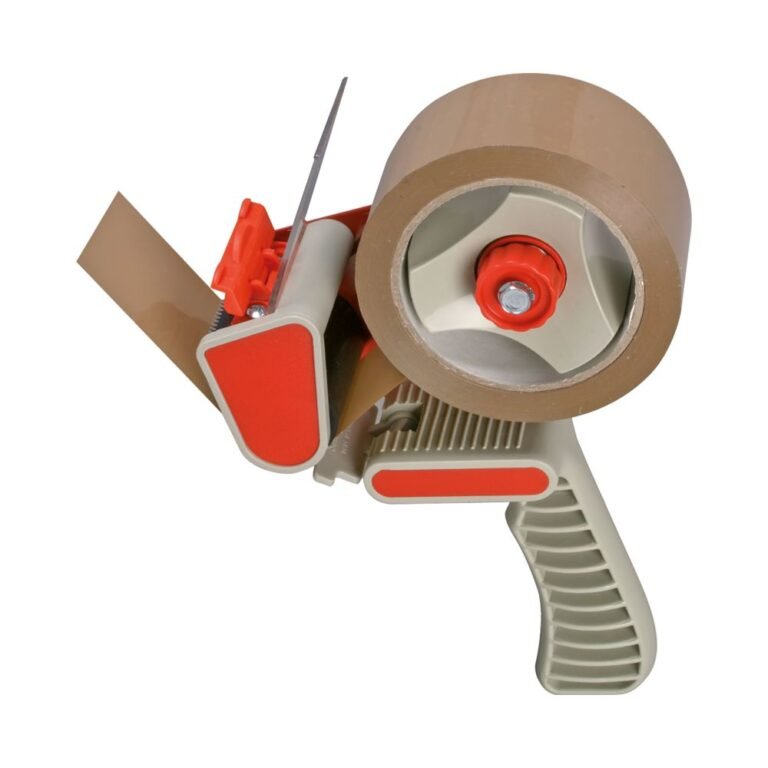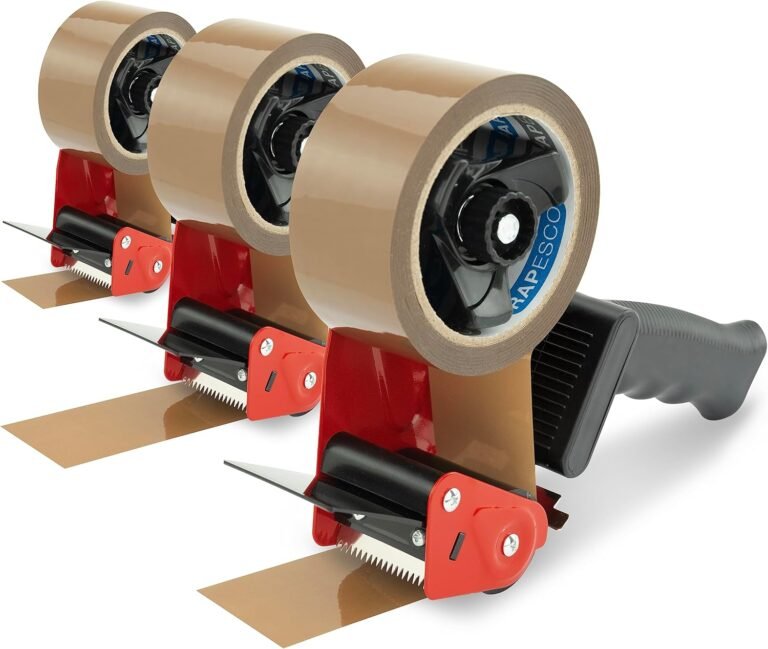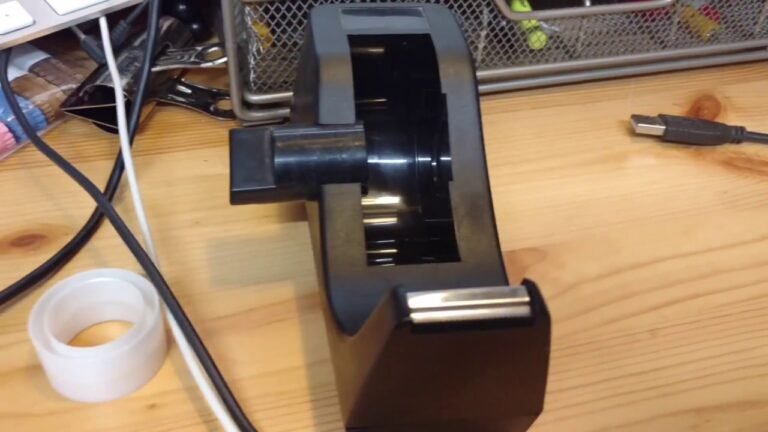
Tape dispensers may contain sand to make them heavier and more stable. The extra weight helps keep the dispenser in place while you pull, cut, or tear tape with one hand.
This design is common in some desktop, craft, gift-wrap, and light packaging dispensers. However, not every tape dispenser has sand. Some use steel, cast iron, cement, water, or a thick plastic base instead.
Why does a tape dispenser need extra weight?
A tape dispenser needs weight because pulling tape creates force. If the dispenser is too light, it may slide across the desk, lift at the front, or tip over.
Sand acts as ballast. Ballast is weight added to an object to improve balance and stability. In a tape dispenser, the sand usually sits in the lower base, where it helps keep the center of gravity low.
This gives the dispenser three practical benefits:
- It stays in place during use.
- It can often be used with one hand.
- It is less likely to tip when the tape sticks or pulls hard.
Think of the sand as an anchor inside the base. It does not help the tape stick, cut, or unwind. Its main job is to stop the dispenser from moving.
How sand makes a tape dispenser more stable
The stability comes from both weight and position.
When you pull tape, your hand applies force above the desk. That force can create a turning effect, also called torque. A heavy base resists that turning effect. A low base also makes tipping less likely.
The basic relationship is simple:
More weight in the base usually means more resistance to sliding and tipping.
The type of sand also matters. Dry sand is made of many small grains. Those grains can settle into the empty spaces inside a molded base. This lets the manufacturer add useful weight without making the entire dispenser from heavy metal.
Some designs may use a bonded sand mixture, such as sand combined with resin or another binder. In that case, the material may feel solid rather than loose when the base is opened.
Why manufacturers may choose sand
Sand can be useful because it is:
- Relatively low cost
- Easy to place inside a hollow base
- Dense enough for small products
- Less expensive than a full metal body
- Able to fit around internal shapes
Still, sand is only one possible filler. A manufacturer may choose another material based on cost, size, production method, moisture control, and the weight needed.
Can You Bring A Tape Dispenser On A Plane? (TSA Rules Explained)
Is sand better than metal in a tape dispenser?
Neither material is always better. The right choice depends on the dispenser’s size, purpose, and build.
| Base material | Main advantage | Common limitation |
|---|---|---|
| Sand | Low-cost weight in a molded base | Can shift, leak, or absorb moisture if poorly sealed |
| Steel | Compact and durable weight | Can cost more and may increase production weight |
| Cast iron | Very stable and hard to move | Heavy, rigid, and often more costly |
| Cement or mineral fill | Dense and inexpensive | Can crack if the base is dropped |
| Water | Easy to add or remove in some designs | May leak, freeze, or cause corrosion |
| Plastic only | Light and easy to make | May slide or tip during stronger pulls |
A metal base often feels more solid because the weight is fixed in one piece. Sand can offer similar stability at a lower manufacturing cost, especially when placed inside a thick plastic shell.
The key question is not simply, “Does it contain sand?” The better question is, “Does the base stay stable during the way I use tape?”

What kind of tape dispensers use sand?
Sand is most likely to appear in dispensers that need extra stability but do not use a full metal body.
Examples may include:
- Desktop office tape dispensers
- Gift-wrapping tape dispensers
- Craft-room tape cutters
- Small packaging-tape dispensers
- Decorative or novelty dispensers
- Weighted dispensers for schools and work areas
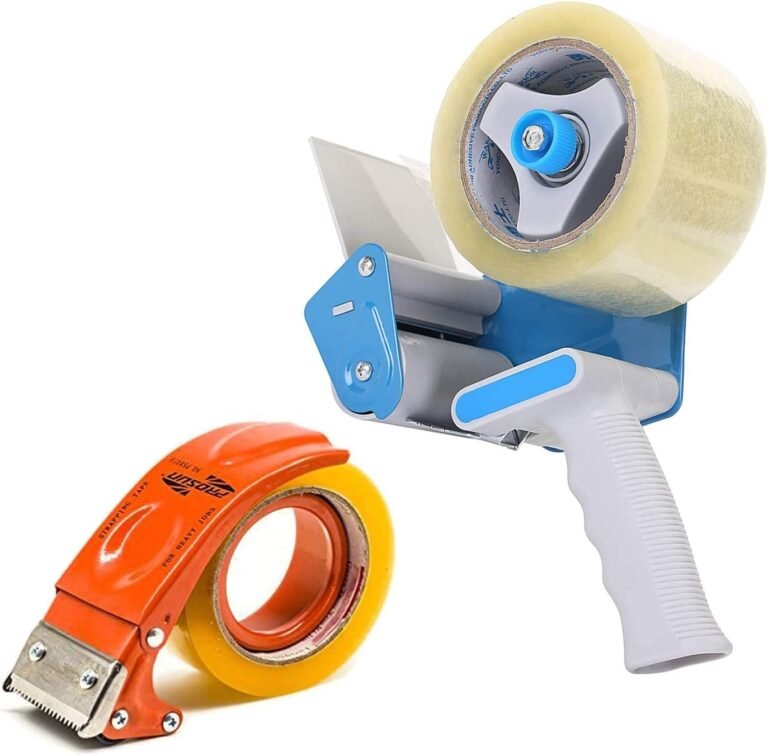
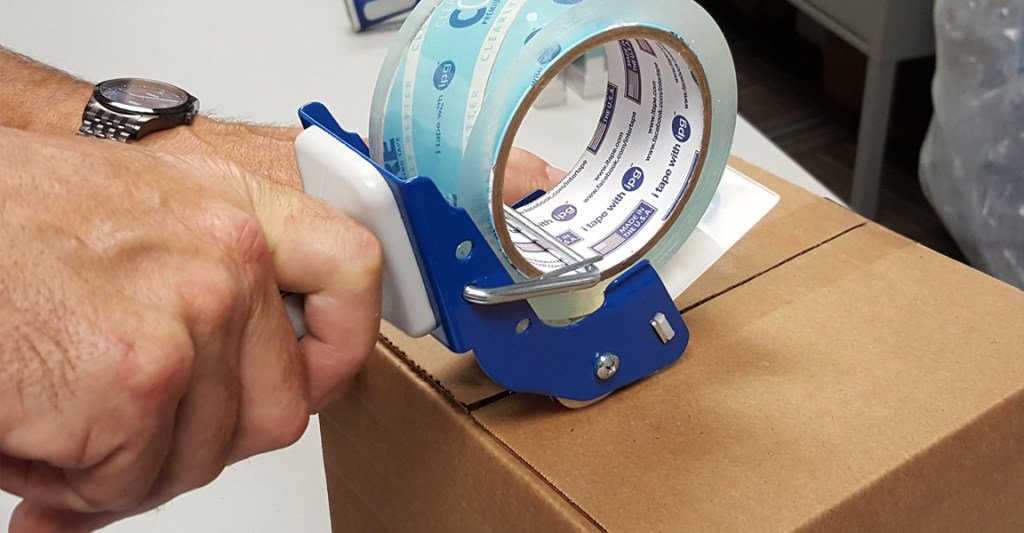
A dispenser designed for heavy shipping tape may use steel or another dense material instead. Packaging tape creates more pull force than thin office tape, so heavy-duty models often need a stronger frame, sharper cutting edge, and more secure base.
The filler is usually hidden inside the base. You may not see sand unless the dispenser has a removable plug, a damaged seam, or a service opening.

How to tell whether a tape dispenser contains sand
You can often identify a sand-filled base without opening it, but you should not take the dispenser apart unless the design allows safe access.
Possible signs include:
- A soft, faint shifting sound when the dispenser is gently moved
- A base that feels heavy but is not made from metal
- A sealed plastic compartment under the dispenser
- A small fill plug or cover
- Fine grains leaking from a crack or seam
These signs do not prove that the filler is sand. Small pellets, mineral material, or other loose ballast can make a similar sound.
Do not drill, cut, or pry open the base. The filler may spill, and sharp plastic or metal edges may cause injury. Some older products may also contain dust, residue, or corroded parts.
What should you do if sand leaks from the dispenser?
If sand is leaking, stop using the dispenser until you inspect it.
Follow these steps:
- Move the dispenser away from food, children, and electronics.
- Pick up loose grains with a damp cloth or a vacuum.
- Check whether the base has a crack, loose plug, or split seam.
- Do not shake the dispenser over a desk or workspace.
- Replace the dispenser if the base no longer stays sealed or stable.
Avoid blowing the sand away. Fine particles can spread into the air and settle on nearby surfaces. If the dispenser is old, damaged, or has an unknown filler, discard it according to local waste rules rather than trying to refill it.
Do not add sand through a crack. Loose filler can enter the cutting mechanism, contaminate the tape, or make the base less stable.
Can you add sand to a light tape dispenser?
Only add sand if the manufacturer designed the base to be filled and provides a safe, sealed opening.
A hollow base is not automatically refillable. Adding loose sand to an unsealed compartment can cause several problems:
- The sand may escape through small gaps.
- The added weight may strain the plastic.
- The dispenser may become difficult to clean.
- The filler may reach the tape roll or cutting blade.
- Moist sand may encourage rust in nearby metal parts.
If the base has a marked fill opening, follow the product instructions. Use the specified filler and do not overfill it. Keep the opening closed before use.
If no instructions exist, replacing the dispenser is usually safer than modifying it. A purpose-built weighted dispenser will have the correct balance and a sealed base.
Does sand improve tape cutting?
Sand does not make the blade sharper. It improves cutting only indirectly by holding the dispenser steady.
A stable base lets you pull the tape against the cutting edge with better control. If the dispenser slides, the tape may stretch, tear unevenly, or pull the dispenser toward you.
Poor cutting can also come from:
- A dull or bent cutting edge
- Tape that is too wide or thick
- A damaged roll
- Tape loaded in the wrong direction
- Adhesive residue near the cutter
- A base that is too light for the tape
Clean the cutter according to the manufacturer’s instructions. Do not touch the sharp edge with your fingers. If the blade is damaged, replace the cutter instead of trying to sharpen it.
Sand-filled versus weighted tape dispensers
When choosing a tape dispenser, focus on the task rather than the filler.
| Your use | Useful feature |
|---|---|
| Thin office tape | Small weighted base and smooth tape hub |
| Gift wrapping | One-hand operation and a stable cutting edge |
| Frequent craft work | Easy roll changes and a base that will not slide |
| Shipping tape | Strong frame, wide tape capacity, and a secure cutter |
| Shared workplace use | Sealed base and easy-to-clean surfaces |
| Child-use area | Covered or protected cutting edge and a stable design |
A sand-filled dispenser can work well for light and medium tasks if the base is sealed and stable. For frequent heavy use, a metal or reinforced dispenser may last longer.
The best choice depends on tape width, pull force, frequency of use, and the surface beneath the dispenser. A smooth desk may need more base weight than a textured workbench.
Common mistakes and safety concerns
The most common mistake is assuming that every heavy tape dispenser contains sand. Weight alone does not identify the filler.
Other mistakes include:
- Opening a sealed base without checking the manual
- Using a damaged dispenser near food or electronics
- Adding water or sand to an unapproved cavity
- Ignoring loose filler under the dispenser
- Touching the cutting blade while cleaning
- Using a small office dispenser for heavy shipping tape
A tape dispenser is a simple tool, but its cutter can still cause cuts. Keep fingers behind the cutting edge, supervise children, and replace any dispenser with a loose or broken blade.
If sand gets into an eye, rinse with clean water and avoid rubbing the eye. Seek medical care if pain, redness, or blurred vision continues.
Frequently asked questions
Do all tape dispensers have sand?
No. Some use sand, while others use steel, cast iron, cement, water, pellets, or no added filler at all. The product design determines the ballast material.
Why is the sand placed at the bottom?
The bottom position lowers the center of gravity. This helps the dispenser resist sliding and tipping when you pull tape from the roll.
Is the sand inside a tape dispenser dangerous?
Sealed sand ballast is not normally a problem during ordinary use. A damaged dispenser can release dust or grains, so stop using it if the base cracks or leaks.
Can I replace leaking sand?
Usually, replacement is safer than repair. Only refill a dispenser when the manufacturer provides a fill opening and clear instructions for doing so.
How can I make a tape dispenser more stable?
Use a dispenser with a heavier base, place it on a clean level surface, and match the dispenser to the tape size. A non-slip pad may help, but do not block moving parts or cover the cutter.
Conclusion
Tape dispensers may have sand because sand adds weight without requiring a solid metal body. That weight keeps the dispenser steady while you pull and cut tape.
The sand is ballast, not part of the tape mechanism. If the base is sealed, stable, and matched to the tape, it can work well. If sand leaks, the base cracks, or the cutter becomes unsafe, replace the dispenser rather than opening or refilling it.