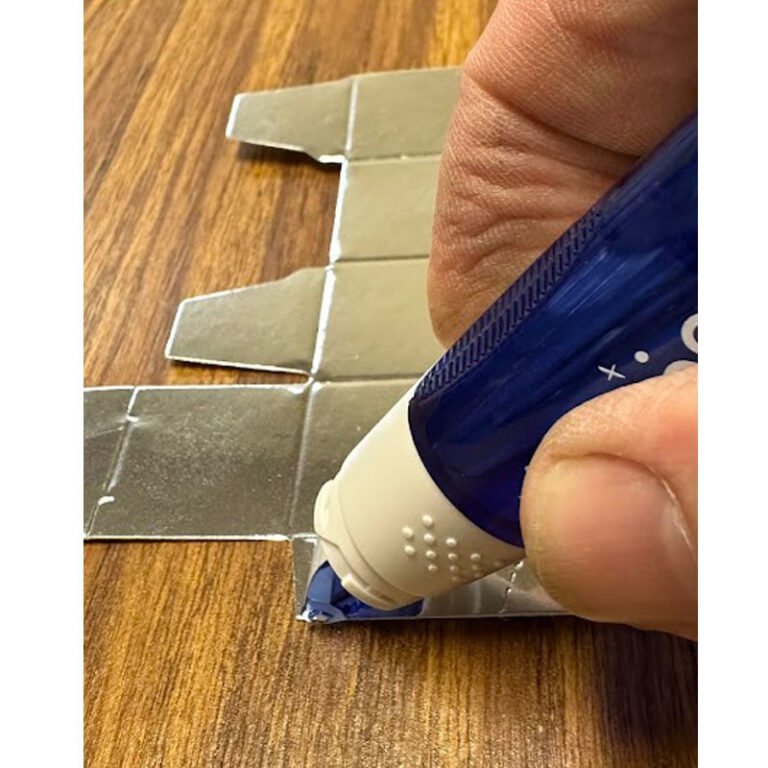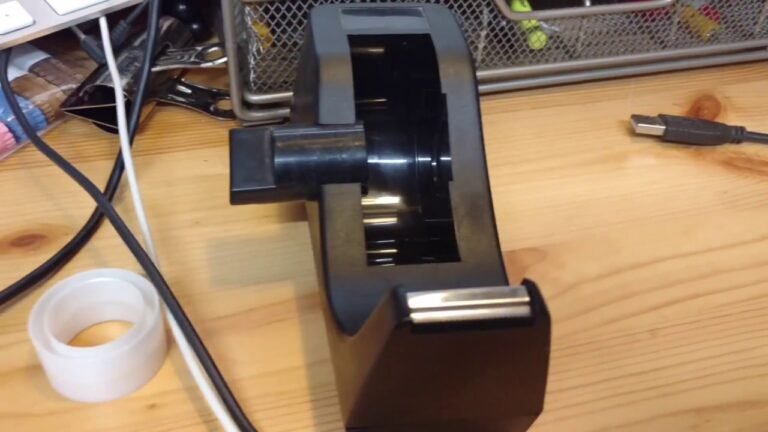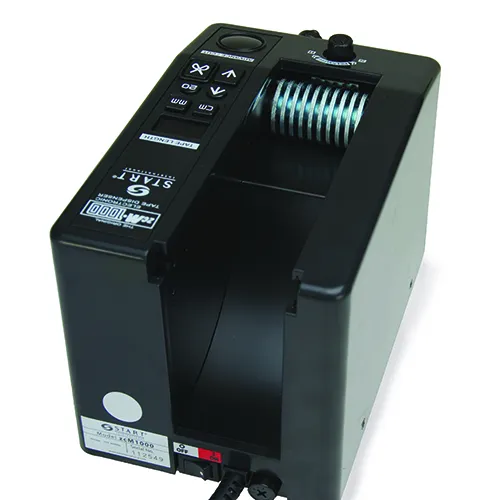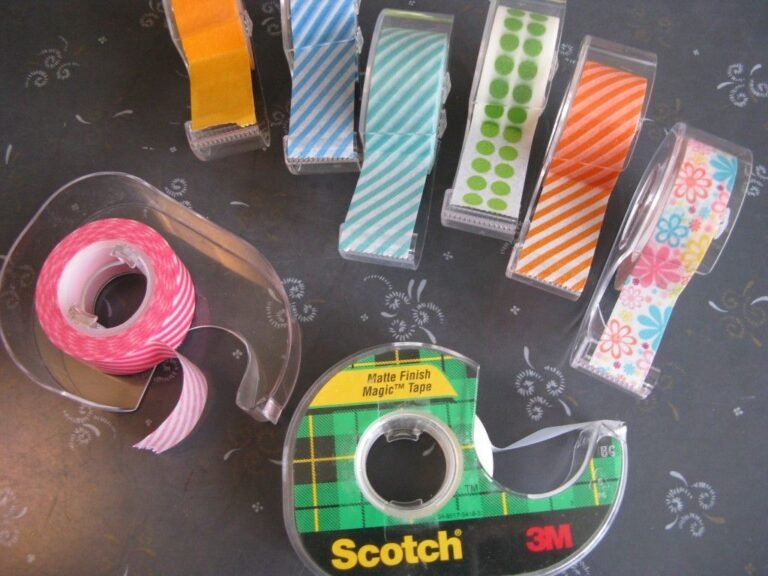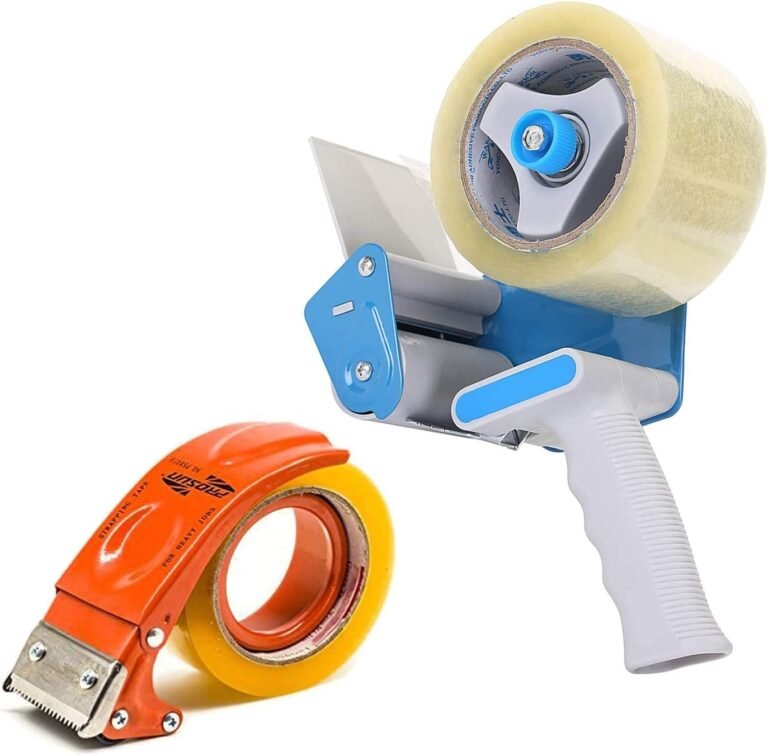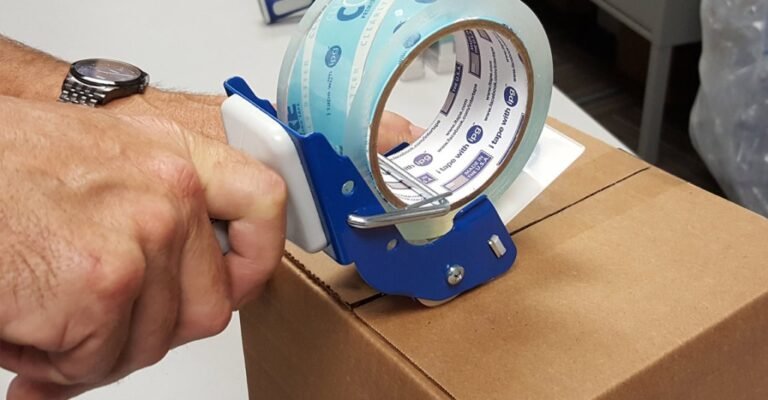
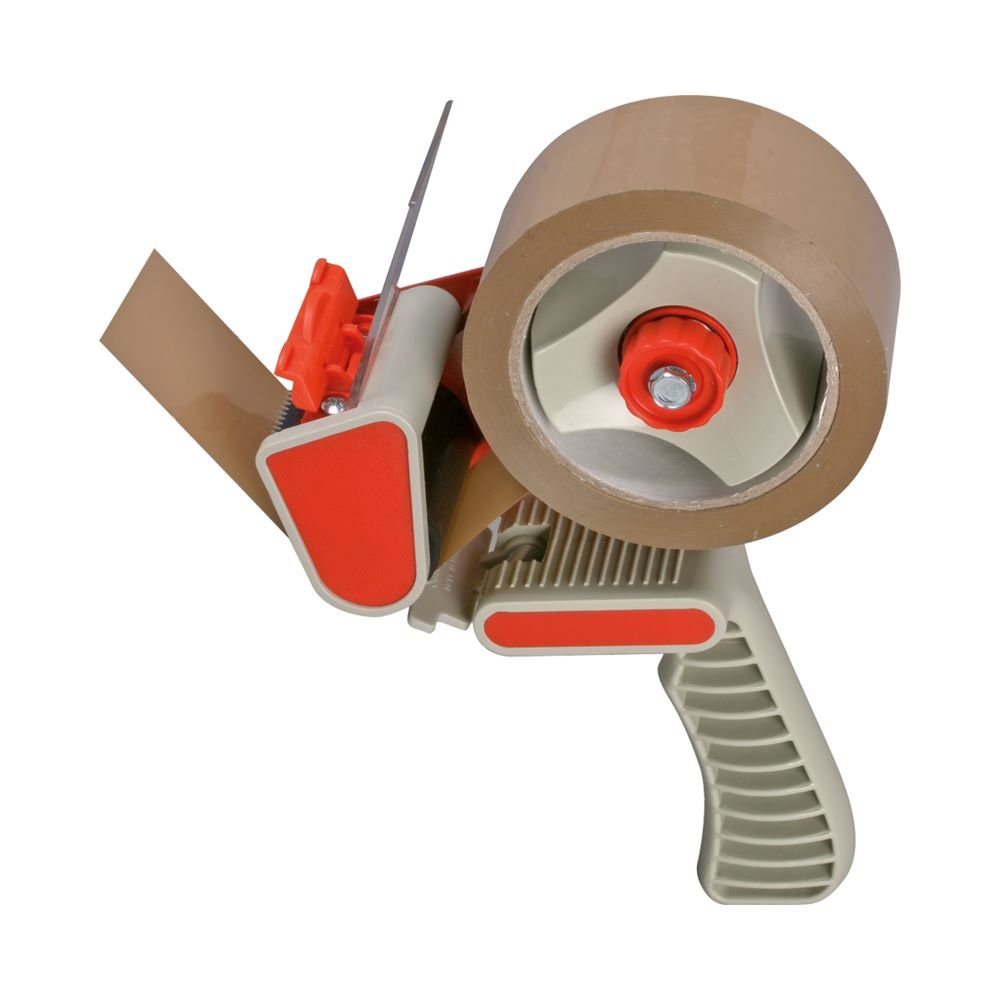
Tape dispensers are usually made from plastic, metal, rubber, and steel. The exact mix depends on the type of dispenser. A small desk dispenser may use a plastic body, a metal cutting edge, and a weighted base. A packing-tape gun often combines molded plastic, a steel blade, a metal axle, and a rubber pressure roller.
In the United States, tape dispensers are common in homes, schools, offices, retail stores, warehouses, and shipping rooms. Their materials must balance four needs: strength, low cost, smooth tape flow, and safe cutting.
The Main Materials Used in Tape Dispensers
Most tape dispensers contain several materials rather than one. Each part has a specific job.
| Dispenser part | Common material | Main reason for use |
|---|---|---|
| Outer body | ABS plastic, polypropylene, or steel | Holds the parts together |
| Base | Plastic, steel, cast iron, or a weighted composite | Keeps the dispenser stable |
| Cutting blade | Carbon steel or stainless steel | Cuts tape cleanly |
| Roller | Rubber, silicone, or plastic | Presses and guides the tape |
| Axle or shaft | Steel or aluminum | Supports the tape roll |
| Screws and springs | Steel | Adds strength and movement |
| Handle | ABS plastic, polypropylene, or aluminum | Provides a grip |
| Adhesive contact surface | Plastic, rubber, or metal | Guides the tape without sticking |
The material can change with the dispenser’s size, price, and intended use. A light office dispenser does not need the same structure as a carton-sealing tool used all day in a warehouse.
Plastic: The Most Common Material
Plastic is the most common material in tape dispenser bodies and handles. It is light, easy to mold, and usually less costly than metal.
ABS plastic
Many hand-held tape guns and desktop dispensers use ABS plastic, or acrylonitrile butadiene styrene. ABS is valued for its impact resistance and stiff feel. It can handle normal drops and repeated handling better than many low-strength plastics.
ABS is often used for:
- Packing-tape gun bodies
- Desktop dispenser shells
- Handles
- Protective covers
- Internal supports
Its limits are also clear. Long exposure to sunlight can make some ABS parts fade or become brittle. Strong solvents can damage the surface. A cracked ABS body may still look usable, but it can allow the blade, roller, or tape path to shift.
Polypropylene
Polypropylene, or PP, is another common choice. It is light and resists many household chemicals. Manufacturers may use it for tape-dispenser housings, covers, and parts that need a little flex.
Compared with ABS, polypropylene often feels less rigid. That is not always a weakness. A flexible part can resist cracking in some uses, but it may bend under high force.
Other plastics
Some dispensers use:
- Polycarbonate for clear guards or stronger parts
- Nylon for low-friction gears or supports
- PVC or blended plastics in certain low-cost products
- Recycled plastic in selected housings or bases
The exact resin is not always printed on the product. Look for a recycling code or material mark on the underside, packaging, or manufacturer’s technical sheet.
Metal Parts: Blades, Axles, and bases
metal gives a tape dispenser strength where plastic may wear or bend. It is most common in the cutting edge, tape axle, springs, screws, and heavy bases.
Steel blades
Most tape-dispenser blades are made from carbon steel or stainless steel.
- Carbon steel can provide a sharp, durable edge at a low cost.
- Stainless steel resists rust and is useful in damp settings.
- Coated steel may have an added finish to reduce corrosion or sticking.
The blade may be serrated or straight. Serrated blades often grip the tape and make tearing easier. A straight blade may produce a cleaner cut but can require more control.
A blade can become dull from heavy use, dirt, adhesive buildup, or contact with hard surfaces. A dull blade may cause the user to pull harder, which increases the chance of a slip.
Steel axles and shafts
The axle supports the tape roll. It is often made from steel because steel resists bending and wear. Some lighter dispensers use aluminum or molded plastic for the axle.
A metal axle can help the roll turn evenly. However, the axle alone does not determine performance. The fit between the roll, axle, side walls, and brake system also matters.
Weighted bases
Desktop dispensers often need a heavy base so the user can pull tape with one hand. The base may contain:
- Steel
- Cast iron
- A metal plate inside plastic
- A cement-like or mineral-filled weight
- Dense recycled material
Some bases have rubber or silicone feet. These feet reduce sliding and help protect a desk.
Rubber, Silicone, and Soft Contact Parts
Soft materials help guide tape and protect nearby surfaces. They are often found in rollers, feet, grips, and braking parts.
Rubber rollers
A packing-tape dispenser may use a rubber roller to press tape onto a box. Rubber provides grip and can conform slightly to uneven cardboard.
A worn roller may show:
- Cracks
- Flattened areas
- A sticky surface
- Tape residue
- Uneven rotation
These signs can cause wrinkles, poor adhesion, or inconsistent tape length.
Silicone parts
Silicone may be used where low sticking, flexibility, or heat resistance matters. It can appear in small rollers, pads, or protective feet.
Silicone is not the same as rubber in every design. It may resist some conditions better, but the actual performance depends on the grade and shape of the part.
Foam and soft grips
Some specialty dispensers use foam or soft plastic on the handle. These materials improve comfort during repeated use, but they can wear faster than a hard plastic grip.
The Ultimate Guide To Packaging Dispensers: Smart Solutions For Faster Packing
How Materials Change by Tape Dispenser Type
The type of dispenser usually tells you more about its materials than the tape width alone.
Desktop tape dispensers
Desktop dispensers are made for office or home use. A typical design includes:
- A plastic outer shell
- A weighted metal or composite base
- A steel cutting edge
- A plastic or metal tape spindle
- Rubber or silicone feet
Some small models are almost entirely plastic except for the blade. Larger models need more weight and may contain a steel plate or cast-metal base.
Hand-held packing-tape guns
Packing-tape guns use more durable parts because the user applies force while sealing cartons. They commonly include:
- ABS or another rigid plastic body
- A steel cutting blade
- A metal or plastic tape axle
- A rubber pressure roller
- A tension or braking mechanism
- Steel screws and springs
A carton-sealing gun may also have a protective blade guard. The guard can be plastic or metal, depending on the design.
Water-activated tape dispensers
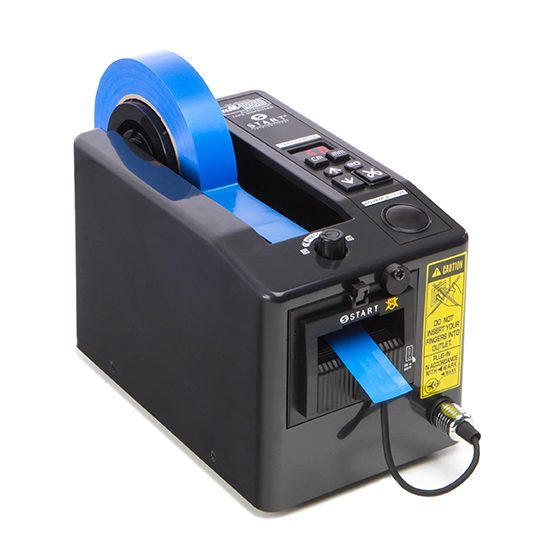
Water-activated tape dispensers are more complex. They may include:
- A metal or plastic frame
- A water reservoir
- A brush, sponge, or wetting roller
- A cutting blade
- A measuring wheel
- Gears
- An electric motor in powered models
Powered models may also contain wiring, switches, a circuit board, and a power supply. These parts mean that the dispenser should not be treated like a simple plastic office tool when it reaches the end of its life.
Specialty and industrial dispensers
Industrial machines may use more steel, aluminum, and engineered plastic. They may need to resist:
- Long operating cycles
- High tape tension
- Dust
- Heat
- Cleaning chemicals
- Large or heavy tape rolls
An industrial dispenser can cost more because its frame and moving parts are built for repeated use, not just because it has a different appearance.
Why Tape Dispensers Use Several Materials
A tape dispenser works by managing tension, movement, cutting, and pressure. No single material is ideal for all four jobs.
Plastic keeps the body light and easy to shape. Metal supports the areas that receive force. Rubber improves grip and reduces sliding. Steel provides a hard cutting edge. Together, these materials act like a small machine.
The design also affects the user’s experience:
- A heavy base reduces movement on a desk.
- A rigid body keeps the tape path aligned.
- A smooth axle helps the roll turn.
- A rubber roller improves contact with a box.
- A sharp blade reduces the force needed to cut tape.
- Rubber feet reduce noise and sliding.
This is why two dispensers that look similar can feel very different in use.
Are Tape Dispensers Recyclable?
Some parts may be recyclable, but a complete tape dispenser often is not accepted in curbside recycling. The problem is that most dispensers combine plastic, metal, rubber, adhesive residue, and sometimes electronic parts.
Before disposal:
- Remove the tape roll.
- Check whether the blade can be removed safely.
- Look for a material code on the plastic body.
- Check your local recycling program.
- Take larger metal parts to a scrap-metal facility if accepted.
- Dispose of damaged blades in a rigid, closed container.
Do not place a loose cutting blade in a recycling bin or household trash. It can injure workers and damage sorting equipment.
The U.S. Environmental Protection Agency explains that recycling rules vary by community. A plastic recycling symbol does not always mean that a local program accepts that item. When the dispenser contains electronics, follow local guidance for electronic waste instead of placing it in a standard recycling bin.
How to Identify What Your Dispenser Is Made Of
You can often identify the main materials with a close visual check.
Look for material marks
Check the underside, handle, or inside cover for:
- ABS
- PP
- PC
- A recycling number
- Stainless steel markings
- Manufacturer material information
These marks may identify only one part, not the whole dispenser.
Use appearance and feel carefully
A plastic body usually feels light and slightly warm compared with metal. Steel parts feel cooler and may attract a magnet. A magnet test can help identify ferrous steel, but it cannot identify every metal and should not be used near sensitive electronics.
A rubber roller feels softer than a hard plastic wheel. A weighted base may sound dull when tapped, but tapping is not a reliable way to identify its material.
Check the product manual
For a branded dispenser, the manual or technical data sheet is usually the best source. Search the model number plus terms such as:
- “material”
- “replacement blade”
- “parts list”
- “technical data”
- “SDS,” if chemicals or powered equipment are involved
Avoid assuming that a black part is ABS or that a silver part is stainless steel. Color and finish are not proof.
Common Questions About Tape Dispenser Materials
Are tape dispensers made of metal or plastic?
They can be made from either material, but many use both. Plastic is common for the body and handle, while metal is common for the blade, axle, springs, and weighted base.
What metal is used in a tape-dispenser blade?
Most blades use carbon steel or stainless steel. The exact grade is usually available only from the manufacturer or product specification.
Are plastic tape dispensers safe to use?
A sound dispenser is generally safe when used as intended. Keep fingers away from the blade, replace cracked parts, and do not use a loose or bent cutting edge.
Can I replace the blade on a tape dispenser?
Some packing-tape guns have replaceable blades. Many small desktop dispensers do not. Use the correct replacement part and follow the manufacturer’s instructions. Do not improvise with a loose razor blade.
Can tape residue damage a dispenser?
Tape residue can make rollers stick and can interfere with the tape path. Remove residue with a method approved for the dispenser’s material. Test any cleaner on a hidden area first, and avoid strong solvents unless the manufacturer permits them.
Which material is best for a heavy-use dispenser?
A dispenser with a rigid body, a strong axle, a durable blade, and a stable base is usually better suited to heavy use. Metal alone does not guarantee better performance; the design and replaceable parts also matter.
Key Takeaways
- Tape dispensers commonly use plastic, steel, rubber, silicone, and aluminum.
- ABS and polypropylene are frequent body materials.
- Carbon steel and stainless steel are common blade materials.
- Rubber rollers and feet improve grip and control.
- Desktop models often include a weighted metal or composite base.
- Packing-tape guns usually need stronger parts than office dispensers.
- Mixed-material dispensers may not belong in curbside recycling.
- Dispose of blades in a rigid container and follow local U.S. recycling rules.
Conclusion
Tape dispensers are small tools made from carefully matched materials. Plastic forms the body, steel supports cutting and movement, and rubber or silicone improves grip. The best material choice depends on the dispenser’s job, from light office use to repeated carton sealing.
To identify a specific dispenser, check its model number, markings, manual, and parts list. When disposing of it, separate removable materials where possible and handle the blade as a sharp object.