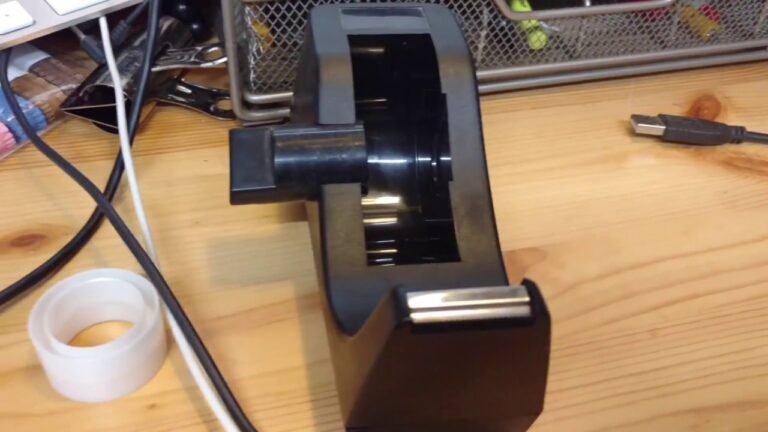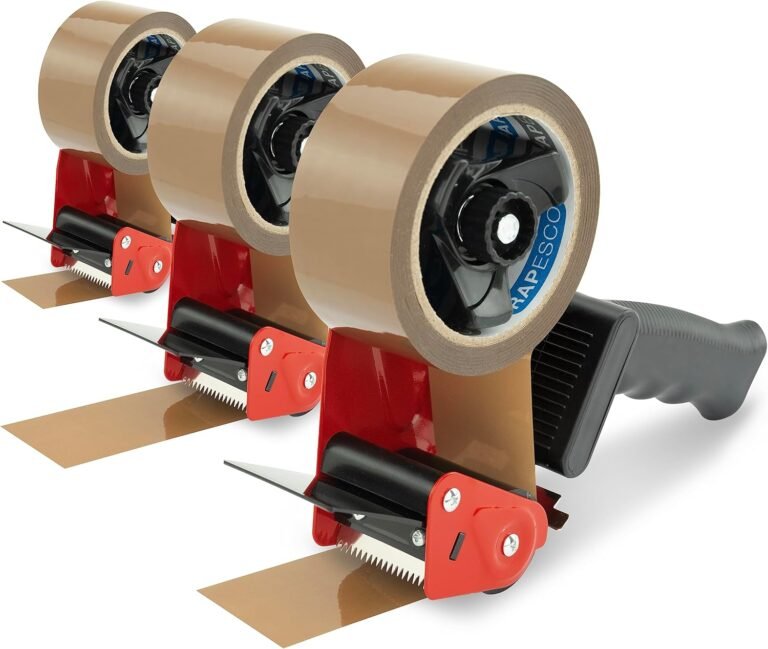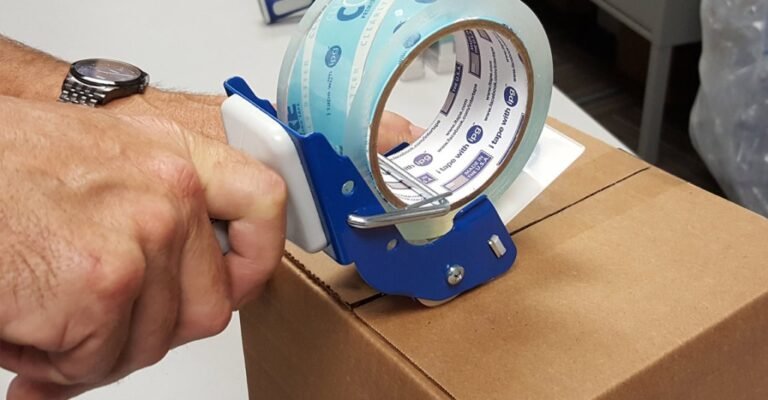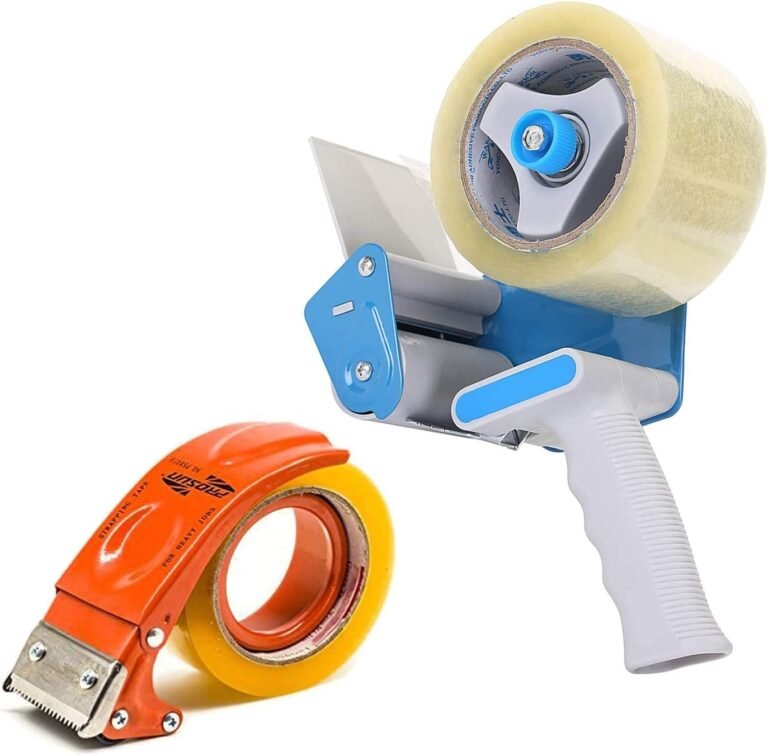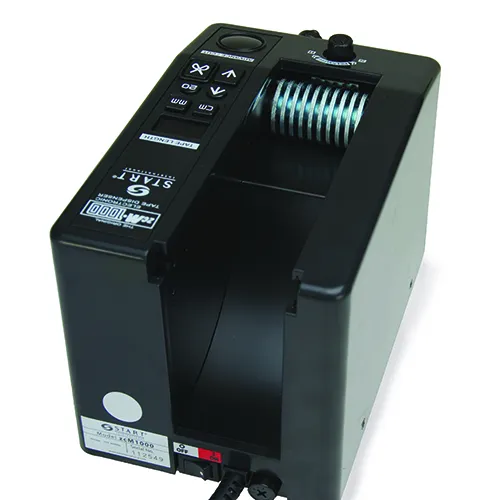
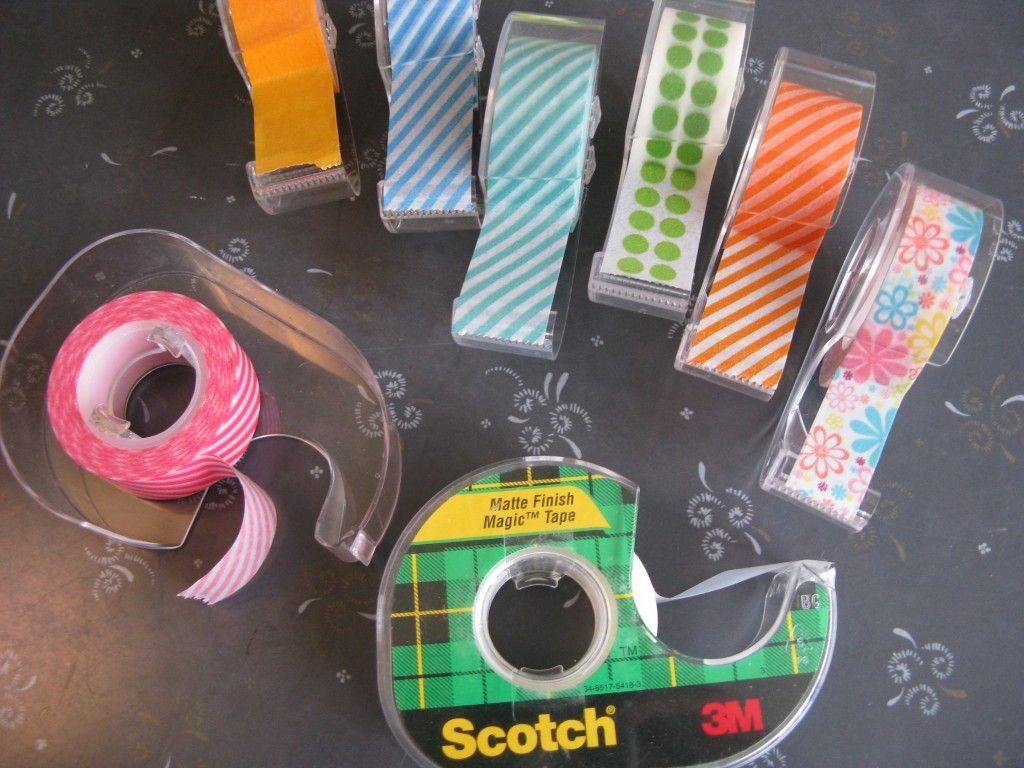
Usually, no—not as a whole item in a U.S. curbside recycling bin. Most Scotch tape dispensers combine plastic, metal, and leftover adhesive tape. Local recycling plants often cannot sort these small mixed-material items, so the dispenser may be rejected or sent to landfill.
You may still be able to recycle parts of it. First, remove the tape roll and any loose tape. Then check your local recycling rules, reuse the dispenser, or separate a removable metal cutter for an approved scrap-metal outlet.
This guide explains how to handle desktop, handheld, and refillable Scotch tape dispensers in the United States.
What Are Scotch Tape Dispensers Made Of?
Scotch tape dispensers usually contain more than one material. The most common parts are:
| Part | Common material | Usual recycling issue |
|---|---|---|
| Outer dispenser | Plastic | Small plastic items may not be accepted in curbside bins |
| Weighted base | Plastic, metal, or both | Mixed parts are hard to sort |
| Cutting edge | Steel or another metal | Sharp and often too small for curbside recycling |
| Tape roll core | Cardboard or plastic | Depends on the local program |
| Tape | Plastic film with adhesive | Usually not accepted with paper or containers |
A dispenser may look like one simple plastic object, but a recycling facility sees a small composite product. Its size, shape, metal blade, and adhesive residue can create problems in sorting equipment.
The recycling symbol on a dispenser does not always mean your local program accepts it. A symbol may identify the type of plastic, not provide a guarantee that the item is recyclable in your community.
Can You Put a Scotch Tape Dispenser in the Recycling Bin?
Do not place a Scotch tape dispenser in your curbside recycling bin unless your local program specifically accepts it. Most residential programs focus on larger, empty containers, paper, cardboard, cans, and bottles.
Small plastic items can fall through sorting screens. A sharp cutter can also damage equipment or injure workers if it breaks loose. Mixed-material objects may be removed during sorting even when one part is recyclable.
The U.S. Environmental Protection Agency advises residents to follow local recycling instructions because accepted materials vary by community. Use your city or county recycling website, or search the official recycling page for your ZIP code.
Before putting the dispenser in a recycling bin, ask:
- Does the local program accept this type of plastic?
- Does it accept small plastic household items?
- Does it accept mixed-material items?
- Can it safely process an item with a sharp metal edge?
- Must the dispenser be separated into parts?
If the answer is unclear, keep it out of the recycling bin. An uncertain item placed in a recycling load can contaminate otherwise useful materials.

How to Recycle a Scotch Tape Dispenser
Use this process to find the safest disposal option.
1. Remove the tape
Pull off any loose tape from the dispenser. If the tape roll still has usable tape, keep it for future use or give it to someone who can use it.
Do not try to scrape adhesive with your finger near the cutter. The edge may be sharp even if it looks dull.
2. Check for a removable refill core
Some dispensers use a cardboard or plastic core. Remove it only if it comes out easily and safely.
- Put a clean cardboard core with paper recycling only if your local program accepts small cardboard tubes.
- Put a plastic core with plastic recycling only if the local program accepts that plastic type and shape.
- If the core has heavy adhesive or tape stuck to it, place it in the trash unless your local program gives different instructions.
Do not force a core out of a sealed or spring-loaded dispenser.
3. Inspect the dispenser for material markings
Look for a plastic identification code, such as a number inside a triangle. This code identifies the resin type. It does not prove that your local recycling service accepts the item.
A marked plastic dispenser may still be too small, too irregular, or too mixed with metal for curbside collection.
4. Ask the local program
Use the exact name of the item when checking local rules. Ask whether the program accepts:
- Small rigid plastic office supplies
- Plastic tape dispensers
- Mixed plastic and metal household items
- Small metal cutting blades
- Empty tape rolls
A recycling center may accept a material at a drop-off site even when curbside service does not.
5. Separate the metal cutter only if it is designed to come off
Some dispensers have a removable cutter. Others have a permanently attached blade. Do not bend, pry, or cut the blade off unless the manufacturer provides safe removal instructions.
If you remove a metal cutter:
- Wrap it in thick paper or cardboard.
- Label the package “sharp metal.”
- Ask a scrap-metal facility whether it accepts small steel parts.
- Never place an exposed blade loose in a recycling bin or trash bag.
A small blade may not have enough value for a scrap-metal facility to accept it. The facility decides whether it can use the material.
Can You Bring A Tape Dispenser On A Plane? (TSA Rules Explained)
The Best Disposal Option Depends on the Dispenser
The right choice depends on its condition and construction.
| Dispenser condition | Best first option | Why |
|---|---|---|
| Works well | Reuse or donate | Extends the product’s life |
| Refillable | Keep for new tape rolls | Avoids buying another dispenser |
| Clean plastic with no blade | Check local plastic rules | Some drop-off programs may accept it |
| Plastic and metal joined together | Reuse or trash | Mixed parts are difficult to process |
| Broken with an exposed blade | Secure it before disposal | Prevents cuts and equipment damage |
| Metal-heavy and separable | Ask a scrap-metal center | May be accepted outside curbside service |
Reuse is often better than recycling
A working tape dispenser does not need special processing. Keep it in a desk drawer, use it in a classroom, or offer it through a local school, office, community center, or reuse group.
This is especially useful for weighted desktop dispensers. Their bases can make them awkward to recycle but useful for repeated use.
Donate with caution
Donate only a clean, safe dispenser. Do not give away one with a loose blade, cracked housing, or unstable base. A recipient should be able to use it without repair or injury risk.
Trash may be the safest final option
If the dispenser is a small mixed-material item, cannot be safely separated, and has no reuse value, disposal in the regular trash may be the correct local option.
Wrap or contain any sharp cutter so it cannot puncture a bag. Follow your local waste service’s rules for sharp household objects.
Can You Recycle Scotch Tape Separately?
Most clear office tape is not accepted in standard U.S. curbside recycling. Scotch tape is generally a thin plastic film with adhesive. It can stick to paper, clog equipment, or reduce the quality of recycled paper.
Remove tape from:
- Cardboard boxes
- Paper envelopes
- Newspaper
- Office paper
- Cardboard cores
A small amount of tape left on a box may be tolerated by some programs, but that does not mean the tape itself is recyclable. Remove as much as you can without damaging the paper.
Some specialty tapes may have different instructions. Paper-based tape, compostable tape, and specialty packaging tape are not automatically recyclable or compostable. Check the exact product label and your local facility’s rules.
The cardboard box or paper item may be recyclable after the tape is removed. The used tape usually belongs in the trash unless a specific take-back program accepts it.
Common Mistakes to Avoid
Do not rely only on the recycling symbol
A plastic number is a material code, not a promise of local acceptance. Recycling systems differ by city, county, and facility.
Do not place loose blades in recycling
A cutter can injure workers and damage sorting equipment. Secure it before disposal or ask a scrap-metal facility for instructions.
Do not put the dispenser in an electronics recycling bin
A tape dispenser is not electronic waste. Electronics programs are designed for items such as computers, phones, printers, and other devices with electrical components.
Do not assume a mail-back program accepts it
Some product take-back programs accept specific brands or materials only. Read the program’s accepted-item list before shipping anything.
Do not put tape in a compost bin
Adhesive tape and plastic film usually do not belong in home or commercial compost. A cardboard core may be compostable in some settings, but only after all tape and adhesive are removed and the local program permits it.
Do not force the dispenser apart
Breaking plastic around a blade can create sharp fragments. If the parts do not separate easily, reuse the dispenser or dispose of it safely as a mixed item.
Quick Decision Guide
Use this short guide:
- Can someone safely use the dispenser again?
Keep, donate, or reuse it. - Does the dispenser come apart without force?
Separate only the parts that are safe to remove. - Does your local program accept the plastic or metal part?
Follow that program’s directions. - Is there a sharp or loose cutter?
Wrap and label it before disposal. - Is the item small, mixed, and not reusable?
Place it in the trash if your local waste service allows that method.
The most environmentally useful order is usually reuse first, local recycling second, and safe disposal last. Recycling is not always the best option when an item is too small or made from joined materials.
Key Takeaways
- A Scotch tape dispenser usually should not go into a U.S. curbside recycling bin as a complete item.
- Remove leftover tape and check whether the dispenser has safe, removable parts.
- A local recycling facility may accept certain plastic or metal parts, but rules vary.
- Reuse or donate a working dispenser whenever possible.
- Wrap and label any sharp cutter before disposal.
- Do not put Scotch tape itself in paper recycling or compost unless a specific program says it is accepted.
Frequently Asked Questions
Are plastic Scotch tape dispensers recyclable?
Sometimes, but not usually through curbside recycling. The dispenser may be recyclable at a special drop-off site if the facility accepts its plastic type and small household items. Check local rules before placing it in any recycling container.
Can I recycle a Scotch tape dispenser at Staples or another office-supply store?
Do not assume that an office-supply store accepts tape dispensers. Store recycling programs often cover specific products, such as ink cartridges, batteries, electronics, or packaging. Check the store’s current program and accepted-item list first.
Can the metal blade from a tape dispenser go in scrap metal?
Possibly. Some scrap-metal facilities accept small steel parts, while others do not. Call before visiting, and safely wrap the blade. Never carry or place an exposed cutter loose.
Is the cardboard roll inside Scotch tape recyclable?
A clean cardboard core may be accepted with paper or cardboard recycling, depending on the local program. Remove all tape and adhesive first. If the core is plastic, follow the local rules for that plastic instead.
Can I recycle the empty Scotch tape roll with paper?
The answer depends on the roll’s material. A clean cardboard roll may be recyclable in some communities. The tape itself is generally not. Remove as much tape as possible before recycling the core.
What should I do with a broken tape dispenser?
If it cannot be reused and contains a sharp blade, secure the blade with thick cardboard or paper and follow local trash instructions. Do not place an exposed cutter in a recycling bin or loose trash bag.
Conclusion
You usually cannot recycle a complete Scotch tape dispenser through curbside recycling in the United States. Its small size, plastic-and-metal construction, and sharp cutter make it difficult for standard sorting systems to handle.
Remove usable tape, separate only safe and removable parts, and check your local recycling provider. If the dispenser still works, reuse or donate it. If it is broken and cannot be accepted through a specialized program, protect the blade and dispose of it safely.